Vanakkam Germany
  • Home
  • About Us
  • Germany 365
  • Comparison
    • Comparison Insurance
    • Comparison Investment
    • Comparison bank
    • Comparison General Utilities
    • Comparison German Tax
  • Services
  • Our Blog
  • Contact Us
  • Events
Vanakkam Germany
  • Home
  • About Us
  • Germany 365
  • Comparison
    • Comparison Insurance
    • Comparison Investment
    • Comparison bank
    • Comparison General Utilities
    • Comparison German Tax
  • Services
  • Our Blog
  • Contact Us
  • Events
Vanakkam Germany
Vanakkam Germany
  • Home
  • About Us
  • Germany 365
  • Comparison
    • Comparison Insurance
    • Comparison Investment
    • Comparison bank
    • Comparison General Utilities
    • Comparison German Tax
  • Services
  • Our Blog
  • Contact Us
  • Events
  SUBSCRIBE

©2022 Soledad, A Technology Media Company – All Right Reserved. Designed and Developed by PenciDesign

Author

instiqa

instiqa

Living in germanyNew to germany

Driving License in Germany/License Conversion – Guide

by instiqa January 2, 2022
written by instiqa
Post Views: 6,841

You’re in Germany, you’ve heard people talk about its great roads and highways and you’re thinking of giving it a try, but you’re confused about Germany’s license regulations when it comes to your foreign license. Worry not, this blog will go over the various scenarios involving your license and how you can use it without any problems. 

Visiting as a tourist 

If you’re visiting Germany as a tourist then worry not as you can use your foreign license to travel around freely, in case your license is not in the Latin or Roman alphabet you can use your international driver’s license, if neither is in the Latin or Roman alphabet then you need to get it officially translated into German or English. 

Living in Germany as an Expat 

Once you get settled in Germany and get your residence registered i.e. your Anmeldung, you can use your foreign license for 6 months or 185 days after which you are required to get your license converted to a  German Driver’s License (der Führerschein). The downside of using your foreign license is that you can’t use car-sharing options as most agencies accept only EU-based licenses to rent out cars. So it is advantageous to get your license converted soon. 

To get your license converted there are 2 different scenarios based on where you are from. You can check your country’s status of conversion here. If your country allows for direct conversion then you do not need to redo the practical and theoretical driving tests. If your country does not allow for conversion then you will have to go through a slightly longer process and redo the tests. 

👉Validity of Foreign Driving License

For countries that allow Conversion 

Step-1: Apply for the license 

The process is fairly easy and quick to start off you need to personally apply for a German driving license at the driving license office (Führerscheinstelle) or the Road traffic licensing department (Straßenverkehrsamt) in whatever city you are registered in. You can make an appointment online or via phone. 

 If your license is a non-EU/EAA one then need to make an appointment for Umschreiben eines ausländischen Führerscheins.  

This process might sometimes differ based on where you’re registered, in case you have any doubts just search for Umschreiben eines ausländischen Führerscheins followed by the city. 

Step-2: Prepare your documents  

  • A biometric photograph, 35 x 45mm 
  • Your valid foreign driving license  
  • A German translation of that license 
  • Your passport or German ID card if you are already a German citizen (Personalausweis) 
  • Proof of how long you have had your current license (if this isn’t displayed on the license) 
  • Eye-test certificate (not older than two years, only needed when you wear spectacles or contacts)

Step-3: Attend the appointment 

All you need to do is attend the appointment and go through a personal interview. 

Step-4: Pick up your German License 

Now all you need to do is submit your foreign license in most cases and receive your German license. 

Commerzbank Girokonto

Related Blog

Guide to Buying a Car in Germany

For countries that don’t allow Conversion

Step by Step Conversion Guide

Step-1: Apply for the license 

With your foreign driver’s license and German residence permit (Aufenthaltstitel), keep in mind you need to have stayed in Germany for more than 185 days to be eligible for a license, go to the Führerscheinstelle in your city. They will then send you an application form with all of the required fields checked. 

Step-2: Join a Fahrschule 

Since you need to do a practical and theoretical test, you need to sign up with a driving school (Fahrschule), some even offer lessons in English. Without the proper education, it would be really tough to pass the tests. The driving schools also help you with the whole process right up to to the end. 

Step-3: First Aid Course and Eye Test 

The first-aid course (Erste-Hilfe Kurs) takes nine 45-minute sessions, and most cities have many providers that offer Saturday classes. You only need to get an eye test if you wear either spectacles or contacts. Many companies additionally provide the option of having the eye exam and image taken on the same day. If they don’t, any optician in your city can do an eye examination for you. A local first aid course is usually recommended by your driving school. 

Step-4: Prepare your documents  

  • A biometric photograph, 35 x 45mm 
  • Your valid Original foreign driving license  
  • A German translation of that license 
  • Your passport or German ID card if you are already a German citizen (Personalausweis) 
  • Proof of how long you have had your current license (if this isn’t displayed on the license) 
  • Proof of completion of a first aid course 
  • Eye-test certificate (not older than two years). 

Step-5: Make an appointment: 

Take the application and proof of completion of the first-aid course to the appropriate Rathaus. Please note that you are registered at the Rathaus, not the Führerscheinstelle. 

Step-6: Go to the Führerscheinstelle 

Once you get to the driving license office, your documents will be evaluated by the German Road Traffic Licensing Department, which will either approve or refuse your request. If your request is approved, they will notify the TÜV that you are qualified to proceed with the procedure. 

Step-7: Study and take the Theory tests 

To get to the practical test, the Theoretical theoretical test needs to be Passed first. 

Even though you may take the exam in English, don’t take it lightly because German traffic laws are quite precise and extensive and you can only lose up to 10 points before failing the test. A web app or a mobile app can help you prepare for the German driving license theory exam in English. 

Step-8: Driving Lessons 

A lot of driving schools require you to take a minimum amount of lessons even if you do know how to drive, they do this to check whether you can adapt to German rules and to also prevent you from failing the practical test which lowers their overall passing rates. Your driving school will schedule an appointment with the local TÜV if your driving instructor is certain that you will pass the practical exam. 

Step-9: Complete the Practical Driving Test 

Arrive early at the venue, be confident and calm, and apply what you’ve learned in class. The examiner will ask you a couple of questions before you get in the car and start the test which lasts for usually about 45 minutes. Upon passing the test the examiner will hand over a slip that certifies that you are allowed to drive in Germany 

Step-10: Pick up your German License 

After receiving authorization from the TÜV, the driving license office issues your license a few weeks after you’ve passed your exam. Before receiving your German license at the Führerscheinstelle, you have to hand in your foreign license without any compromise and pay a nominal fee. Your experience, unfortunately, drops down to 0 and you need to wait for a year before you can rent a car. In case you have a good driving record, get a summary from your previous car insurance company, that will allow you to lower the insurance cost if you are going to buy or own a car in Germany. 

Step-11: Nothing 🙂

Congratulations, hopefully, you are done with all the procedures and have received your driver’s license. Although many people think licenses are for a lifetime in Germany, it is only valid for 15 years. 

For more tips about the driving license in Germany and its conversion, check out the Video

Mandatory Theory and Practical Class

Here you will find an overview of the mandatory hours for the respective driving license classes.

Related Blog

Guide to Choosing a Car Insurance in Germany.

Cost For Conversion 

Steps 

Cost 

Registration at the Rathaus 

35 euros 

First Aid + Eye Exam 

40 euros 

Registering at a driving school 

250-400 euros 

Translation of Driving License 

50-60 Euros 

Theory app charges 

60 euros 

TÜV test charges (Theory + Practical) 

115 euros 

Comprehensive exam fees at the Driving school 

230 euros 

Driving Classes (14 total, each lasting 60 minutes) 

840 euros 


The total of which comes up to 1700 euros, keep in mind depending on the driving schools you choose and the city you live in, the charges can either reduce or increase. Above price are just a rough estimate. 

Hopefully, this blog helps you in your long and expensive journey to get a driver’s license. If you found this helpful consider subscribing to our newsletter for other helpful tips and blogs. 

American Express Payback Card
January 2, 2022 0 comment
0 FacebookTwitterPinterestEmail
Living in germanyNew to germany

Choosing A Car Insurance In Germany- A Guide

by instiqa December 26, 2021
written by instiqa
Post Views: 4,131

In Germany, car insurance is legally mandatory when owning a car. In this blog post, we tell you about the different types of coverages that car insurances have and a few insurance companies that we like. Kfz Versicherungen or Car Insurance in Germany is divided into three types based on their coverage schemes.

How much does Car Insurance cost in Germany? 

The average yearly auto insurance price in Germany in 2019 is around 260 euros for Liability plus 333 euros for the Fully comprehensive add-on, or 87 euros for the partial protection add-on, according to the German Insurance Federation (GDV). Just remember that prices can vary based on your providers and a variety of other factors. 

Comprehensive – coverage (Vollkasko) 

This covers both the Haftpflicht and Vollkasko , as well as all damages to your own vehicle or yourself in the event of an accident. Even if the collision was your fault, your insurance company pays for the individual whose car you destroyed, as well as money to repair or replace your own automobile. 

As you may expect, the insurance will be more expensive because there are more obligations. Some policies additionally cover scenarios like the driver’s lifelong disability as a result of a crash or even the death of a passenger.  When buying a car with the help of a dealer, you will mainly be pushed to take out full coverage (Vollkasko) to cover the risks. 

Partial – coverage (Teilkasko) 

This includes Haftpflicht as well as a variety of other unforeseen dangers that life might throw at you, such as damage from theft attempts or actual theft, fire, glass damage, thunderstorms, and other similar events. Note that in this policy vandalism is not covered. 

Liability or Third-party coverage (Haftpflicht) 

Since car insurance is legally mandatory third-party coverage is the least coverage you can opt for to register your vehicle.  In the event of an accident, it covers all damages you and your vehicle may cause to other persons, automobiles, or property and also pays for their medical expenses. If the damage to your automobile was caused by you, it is not covered.

Coverage 

Haftpflicht 

Teilkasko 

Vollkasko 

Other people’s or vehicles’ property has been damaged 

✓ 

✓ 

✓ 

Theft or theft attempts 


✓ 

✓ 

Fire, flood, or other weather-related damages. Collision with animals. 


✓ 

✓ 

Broken glass 


✓ 

✓ 

Damage made to your own vehicle in an accident. 


✓ 

Vandalism 


✓ 

Gross negligence 


✓ 

In general, while purchasing car insurance in Germany for a newly purchased car, comprehensive coverage is recommended because you have invested all your money in it. For used cars, Teilkasko is better.  

Related Blog

Guide to How to Buy Car in Germany?

Car Insurance for Expats 

The only English car insurance in Germany is Getsafe, which makes it easily accessible for ex-pats who do not know German. Check out their Website to check more information about their different car insurance coverages. 

WERBUNG*

Are there ways to save up on your Car Insurance? 

The majority of the time, the answer to your inquiry is yes. Simply inquire as to what documentation your potential insurance provider will want to demonstrate your excellent standing. This would allow you to obtain lower auto insurance in Germany, which is reserved for expert drivers. It has the potential to save you hundreds of euros every year. Some other ways on how you can reduce or save up on your car insurance are mentioned below 

  1. Find a Good Deductible

It goes without saying that the lower your insurance policy, the higher your cost. Since damages to cars tend to be more costly, Generally you should have a deductible of around 150 Euros for Teilkasko and 300 Euros euros for Vollkasko  in order to reduce the cost of your car insurance. Only some providers offer monthly payments, and with ones that do you end up saving up more money if you opt for annual payments instead of monthly or quarterly. 

  1. Keep your old Driving Record

German insurance providers will accept your current driving record based on your Country of Origin. Your car insurance premiums can be reduced in case you have a clean driving record without any crashes for a few years. To make use of it, obtain an official summary of your good driving history from your previous insurance provider and provide it to your new German car insurance. 

  1. Submit your Annual Mileage Realistically

The higher the number of kilometers you drive every year, the more likely you are to be involved in an accident. As a result, the more Kilometers you put down during the registration procedure, the more expensive your insurance coverage will be. In case you drive less than your estimate contact your provider and hopefully, your insurance will be decreased for the next year, and if you’re lucky, you could even get a refund for the year you have spent. 

  1. Stay Accident-Free

You earn a No-Claim Bonus each year if you avoid making any insurance claims. Whenever your insurer pays for an accident or vandalism repair the following year, your annual rate will increase. Your Schadenfreiheitsklasse (no-claim class) determines this; the greater it is, the larger the bonus removed from your insurance contract. 

Find a table with insurers’ different Schadenfreiheitsklassen (no claims) can be found on with your insurance providers’ documentations. 

Here’s a quick rundown to help you get a better idea of what’s going on. 

Claim-free years 

Schadenfreiheitsklasse 

Bonus 

2 years 

SF2 

15% 

3 years 

SF3 

30% 

4 years 

SF4 

40% 

5 – 8 years 

SF5 – SF8 

45 – 50% 

9 – 15 years 

SF9 – SF15 

55 – 60% 

16 – 25 years 

SF16 – SF25 

65 – 70% 

26+ years 

SF26 and above 

75 – 80% 


  1. Accept Werkstattbindung

You may save roughly 10% on your premium if you sign a contract with Werkstattbindung. Werkstattbindung implies that you must get your automobile repaired in a shop that has been approved by your insurance company. You should not have any drawbacks if you reside in a city. In case you live in a far-off region, make sure you check how far the next partnered workshop is. 

  1. Deduct It From Your Taxes

Your car insurance premiums can be deducted from your Taxes if you have a job. When filing your tax return, you can deduct the whole cost of your automobile insurance if you are self-employed.

  1. Compare your Insurance yearly

Many German car insurances renew themselves automatically on January 1st. Generally, there is a one-month time period to cancel your car insurance from the beginning of the year (November 30th), so there are usually a ton of offers or discounts on car insurances that may be cheaper can your current plan.

December 26, 2021 0 comment
0 FacebookTwitterPinterestEmail
Investment in Germany

OPENING A DEPOT ACCOUNT WITH SCALABLE CAPITAL

by instiqa December 26, 2021
written by instiqa
Post Views: 4,415

So you have decided to invest your money in Germany which is why you’ve landed here. Everybody invests because the money that would otherwise sit idle in a bank will earn a high rate of return when you invest it, this will be really helpful for Expats in Germany.   

In Germany you can invest your money in various financial instruments through many online brokers available. There are banks that offer trading accounts as well. To start investing, you must have 2 important things that is a Broker and Depot Account 

Broker–  As the medium between the exchange and you, the brokerage institution acts as the intermediary.  

Depot Account – A depository account is an institution where you place your financial instruments, like stocks, ETFs, or funds, for safekeeping. In German, it is called a Wertpapierdepotkonto. 

Today we will be looking into one specific trading platform called Scalable Capital and will be guiding you with opening a depot account as well.  

Scalable Capital 

It is a digital trading platform where you can buy or sell ETFs, stocks, funds and so on. The best part about this platform is one can buy and sell shares at just 99 cents with their free broker plan. They also a free savings plan and have over 1300 ETFs.  

You can start your savings plan with a minimum amount of 1 euros per month and the minimum order volume is 250 euros when trading through gettex.  

Another advantage to this platform is it is German based which means the taxes will be deducted directly at the source.  They have 3 plans: 

Free Broker 

Free Broker Plan does not require monthly subscriptions, which is a huge advantage. You can trade ETFs, Stocks and even set up a free savings plan, with a minimum savings amount of 1 Euro/month. There is no transaction fees for setting up a ETF & Stocks Savings Plan.  

Prime Broker 

With PRIME Broker Plan, you can trade stocks and ETFs without paying any additional transaction fees when the order volume is more than 250 Euros. This applies to all ETFs you invest in under this plan. Under this plan you will have to pay for the complete year. 

Prime Broker Flex

At a subscription rate of 4.99 Euros per month, Prime Broker Flex offers all the features of the PRIME Broker plan. The Prime Broker flex plan requires monthly payment and this can be cancelled at any month during the year.  

Related Blog

Read this Blog on the Taxes on Stocks in Germany

728x90 esg

Eligibility Criteria - Opening a depot account

The following are the requirements to open a depot account with scalable capital:  

  • Must be 18 years old or more 
  • In the USA, you are not taxable 
  • You do not reside in Switzerland. 
  • A SEPA-based credit institution holds your current account. 

Step by Step Process – Open a Depot account in Scalable Capital? 

Step-1: Visit Scalable Capital Sign Up Page 

Once you land on the homepage of the scalable capital website, in the top right hand corner you will notice an option called as Open Account/Kunde Werden.  

Step-2: Choose the Product

Click on the option, you will go to next page where you will notice 2 options for you to choose from Broker or Vermogensverwaltung. Click on the broker option. 

Step-3: Sign up – Register your Email ID 

You will be redirected to a new page called the Depot eroffnen, enter your email ID in the given space and complete the verification process.  

Step-4: Choose the Right Plan

Once the Email is confirmed. You will now be able to view the 3 plans offered by them. Choose the plan of your choice.  

Step-5: Fill your Personal Information

Fill all your Personal details like Name,Marital Status, DOB, Place of Birth, Country, Nationality, Address and your IBAN Number. One needs to make the first deposit, this can be as little as sufficient which is 1 Euro. Click on Agree Terms and Conditions.

Step-6: Verification process

Now you will have to verify yourself with the Postident procedure which allows Deutsche Post employees to identify a person’s identity securely.  

OPEN YOUR FREE DEPOT ACCOUNT

Once your verification is done you’re all set to go! Now you can start trading with the help of the gettex platform. 

I hope this blog helped you understand the process of opening a depot account in scalable capital. Check out our youtube video HERE to understand it better.  

December 26, 2021 0 comment
0 FacebookTwitterPinterestEmail
Living in germany

Comparison of banks in Germany

by instiqa December 13, 2021
written by instiqa
Post Views: 7,032

Image Source: Foto von Pixabay von Pexels

Comparison of Banks in Germany

Choosing the right bank according to your interests might a bit hectic as an expat in Germany. Germany has many banks offering a variety of services, and most are free of charge, while for others there is a minimum amount of money you need to deposit each month. Here we would be discussing some of the best banks you can consider opting for. 

Compare Different Banks in Germany

Comdirect

Comdirect is another online bank that allows you to create an account without an Anmeldung. It offers more services for a slightly higher fee than N26. If you are younger than 28 or receive at least 700 euros a month, you can now open one of the best German bank accounts for free.  

You will also not be charged a monthly fee if you use Apple Pay or Google Pay at least three times per month or if you use comdirect broker account at least once per month (including savings accounts). In the event you require a broker account, then it might be the better choice. 

Despite the lack of Comdirect locations throughout Germany, you don’t have to worry since the Visa credit card allows you to withdraw cash from any machine across Germany and abroad without any additional fees.  

Advantages:  

  • No monthly fees 
  • Free withdrawals at ATM 
  • Open your account easily from your smartphone via VideoChat 
  • Debit  cards are free 

Disadvantages: 

  • Only online services available  
  • In the case of payments in foreign currencies, 1.75% is charged as a foreign transaction fee 
  • Services only available  in German 
  • Some passports cannot be used with PostIdent. Most Indian passports cannot be used. 

N26

N26 is for those of you who prefer getting things done at your convenience. This is an online bank which brings opening a bank account easier by bringing banking to your smartphone or desktop. It is famous among expats and do not require a Anmeldung as well. To sign up for a free account, you will need an ID/passport, your address, and your webcam for verification. There is no monthly fee and ATM withdrawals are free as well.  

you can open an account without Anmeldung, if your country is in this list.

Advantages:  

  • Provides a banking app and support in English, German, Spanish, French & Italian 
  • You can withdraw up to five free withdrawals per month from any ATM within the Eurozone 
  • No monthly fees 
  • Free virtual Mastercard debit card 
  • Open your account easily from your smartphone via VideoChat 

Disdvantages:

  • Cash withdrawals outside of the Eurozone cost 1.7% 
  • No branches available for immediate contact 
  • Fewer services than traditional banks 

Commerzbank Girokonto

Commerzbank 

Commerzbank is a classic bank. There are branches everywhere. It offers good services, but its fees are high. They offer English-language online banking. Other services are in German. Most types of passport are accepted. The Girokonto Basic from Commerzbank is free if you receive at least 700 EUR of incoming payments per month, otherwise it is 9.90 EUR per month. 

You also get a debit card that allows you to use CashGroup ATMs(Commerzbank, Deutsche Bank, HypoVereinsbank & Postbank). If you withdraw cash from an ATM outside of the CashGroup network or from an ATM outside of Germany, there is a fee. Commerzbank’s bank account package also includes a virtual debit card. They have branches with English speaking staff which is a big plus.The online banking portal is available in English.It is also supported by Apple Pay and Google Pay. 

Advantages: 

  • Online banking portal in English & German 
  •  Free of charge (if you earn 700 EUR/month) 
  • Agencies with personalized advice (often in English) 
  • Easily open your account of your smartphone via VideochatFree 
  • Debit card (Girocard) and virtual debit card  
  •  Free Euro transfers via online banking within EU/ EFTA (SEPA) 

Disdvantages:  

  • Free cash withdrawals only at CashGroup ATMs 

728x90 esg

👉 Documents required for opening a bank account

  • Application form that is completely filled out 
  • Your passport and you must have a valid German residence permit 
  • Proof of Registration and/or mailing address 
  • If you're opening a student account, you'll need proof proving you're a student 
  • Proof of income or employment is required 
  • Make a first deposit (the minimum depends on the bank of your choice) 
  • SCHUFA's credit score (some, not all, banks require it)

Best banks for expats 

Since expats are new to the place and might not be well versed with direct contacts. Considering online banks would be a quick and feasible option with less paperwork as well. A digital bank, based on this notion, is perhaps the best option for expats who are new to Germany. 

This is due to the fact that digital banks are app-based and often have no charges. Certain digital banks, such as N26, it allow you to open an account with simply your passport before you arrive in Germany, no registration required! They frequently provide multilingual help, both within the app and for customer care. 

PROCESS TO VERIFY THE IDENTITY

The process of opening an online bank account in Germany also requires the verification of your identity. You might need to use  

  • Webcam - NOTE: Indian Passports are not accepted for Videoidentification
  • Email verifying code OR 
  • using Postident, which is an approved substitute for identifying your identity. You must submit your passport and a verification form at the post office if you want PostIdent to verify your identity. Download the form from the bank's website. After the documents are signed and returned, PostIdent verifies your identity.

Factor to consider to choose the right one for you 

Banking Services: You should research and ask questions about the services offered by the bank before opening an account with that bank. Despite the fact that many banks in Germany offer a wide range of services, it is important to gather the full set of details in advance. 

Maintenance and Withdrawal Fees: When choosing a financial provider, fees are an important factor to consider. Keep an eye out for maintenance and withdrawal fees since some ATMs charge up to five euros. 

Customer Support: When it comes to banking, customer support is of utmost importance. Especially in terms of language. You need to register with a bank with English-speaking customer service if you are unable to speak German. 

Branches and ATMs: There are many branches and ATMs in Germany. The convenience of being able to access your money at any time and anywhere is invaluable. 

Online Services: Banking services online are essential and save time. If you prefer online services then you might carefully look into this factor. 

December 13, 2021 0 comment
0 FacebookTwitterPinterestEmail
Living in germany

Understanding the German Credit Score(SCHUFA)

by instiqa November 12, 2021
written by instiqa
Post Views: 5,651

Image Source: Stepans – Freepik.com

In Germany, you will most likely be asked for several documents proving you're a decent tenant and can and will pay the rent on time when looking for an apartment to rent. One of these documents is called Schufa.  

Some of the questions you might have now are; what is SCHUFA? And why is it such a challenge for newcomers to Germany? 

This blog aims at answering all that, keep reading! 

What is SCHUFA?  

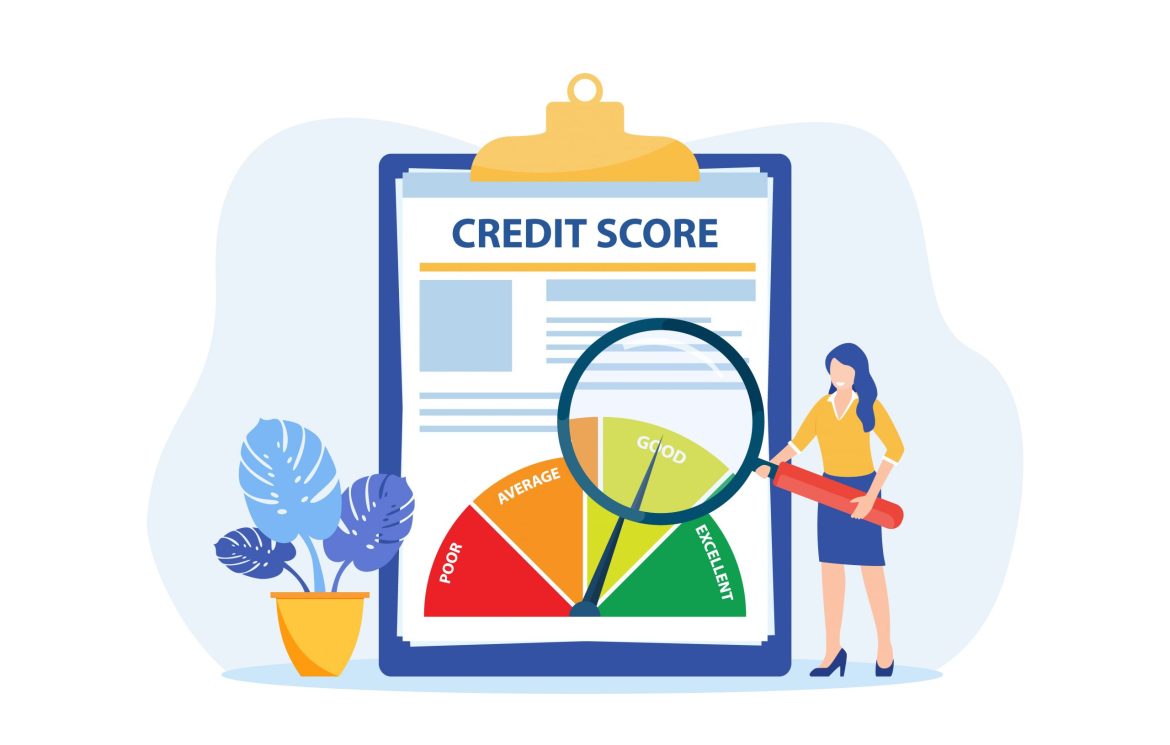
SCHUFA stands for Schutzgemeinschaft für allgemeine kreditsicherung which means General credit protection agency. This is the German credit score that is based on your financial history, it indicates your creditworthiness. The Schufa Holding AG collects data from various sources, such as banks, credit card companies, mobile phone companies, and any other place where a contract is required and then they create a comprehensive report about your financial stability and reliability.   

Paying your bills later, or missing payments and other such things result in a decrease in your Schufa score. 

SCHUFA document, and its necessity?   

As previously said, your potential landlord will most likely require that you share your Schufa paperwork. The report assesses your financial stability and informs the landlord if you are a trustworthy rent payer. Almost every financial decision you make in Germany will need you to consult your Schufa: when signing a contract with a mobile phone or internet provider, while applying for a loan or mortgage, and so on. The final score you receive is based on previous experience and shows the likelihood that you will satisfy your financial responsibilities. 

How to know if you have a good SCHUFA score?

In theory, the highest SCHUFA score (called your “Basisscore” ) that you get at the beginning is 100%, but if you don’t pay your bills, this score will decrease accordingly. Having a low credit score can be frustrating, as you might not be able to take on other contracts. However, even if you are able to pay all your debts, your score will go down for some reason.  

For example, it is perfectly fine for you to have as little as 95% of the score. To give you an idea, here are the different “Basisscore” tiers and what they are. These scores indicate your creditworthiness to pay your bills, credit cards, and contracts on time.  


Score value  

Risk assessment – Level of risk  

Above 97.5 %  

Very low risk  

95 % – 97.5 %  

Low to negligible risk  

90 % – 95 %  

Satisfactory to increased risk  

80 % – 90 %  

Fairly increased to high risk  

50 % – 80 %  

Very high risk  

Under 50 %  

Critical  

How to apply?  

Purchasing a Schufa Bonitätsauskunft directly from meineSCHUFA is the easiest method. This is an official credit report that all landlords accept, which ensures your privacy.  

If you plan to apply for a flat, be sure to get a report at the same time to ensure its current. Make sure you opt-in for an online download when you buy your report-you’ll receive a confirmation email.  

Once you receive the confirmation email, you can download the PDF using the unique verification code provided. Ignore meineSCHUFA Kompakt, plus, and premium, as these services aren’t required for this purpose. 

How to get a free SCHUFA record? 

Every resident is legally entitled to at least one free review of their data. A free copy is available once a year. Simply order it online and it will be sent to you by mail (the free version is only available once every year). Please keep in mind that it may take up to four weeks to receive the document.  

In order to order your free Schufa online: 

  • Visit the SCHUFA website to find this page 
  • You should see 2 columns, one of which is for free: “Datenkopie”. Click on Jetzt beantragen (order now) and you will be redirected to a page with a form to fill out.  

  • Fill in all the required fields in the next screen. If you have shifted your House in the recent days, enter the old address in the ‘Frühere Addresse’ section 
  • Image Source: www.meineschufa.de
  • You can also upload a copy of your ID card, passport, and Meldebescheinigung (residence registration certificate). 
  • A paper copy will be mailed to you after you submit a request(which might take upto 4 weeks) 

Get a SCHUFA record Immediately? 

For those of you who don’t want to wait that long; you can receive the SCHUFA on the spot for €29.95

You can place an order for a Bonitätsauskunft record by clicking on “Jetzt Bestellen” on the SCHUFA website. 

  • Fill in your personal information and the payment method and information.  
  • Download your SCHUFA report immediately. 

Another alternative is that you can receive the Schufa on the spot at different banks. Here you can find the closest one and just ask for one, the service is open to all, not restricted to bank customers.  

728x90 esg

KEY POINTS TO REEMBER

  • SCHUFA reports are usually not available to foreigners unless they have already lived in Germany for some time and have a German bank account. If this is the case, they will need some other proof of their financial standing. 
  • It's not possible to alter your current rating using foreign sources. 
  • The Schufa will continue to collect information about you after you leave Germany, so make sure none of your open payments are left behind.

How to improve/maintain a good SCHUFA score? 

Here are a few recommendations to maintain a good SCHUFA score (above 95%): 

  • Pay your bills on time 
  • Avoid opening too many bank accounts in different banks 
  • Keep your credit cards to a minimum. 
  • Taking out one large loan affects your credit score less than many smaller ones 
  • You shouldn’t zero out your bank account, but rather keep it healthy 
  • Avoid switching bank accounts too often.  
  • Make sure not to move too much, as this can affect your score 
  • Make sure you correct any errors in your SCHUFA-score once a year. 

Conclusion 

This sums up that one fact about SCHUFA that it purely depends on your behavior alone and not your income. You’re rated based on how you pay your bills, which influences whether you’ll qualify for a loan, a mobile phone contract, or that new TV you want to pay by installments. 

Make sure you pay your bills on time, and always try to maintain a good Schufa score, otherwise, it can backfire.   

November 12, 2021 0 comment
0 FacebookTwitterPinterestEmail
Living in germany

TV/Radio Tax In Germany – Everything you need to know

by instiqa October 30, 2021
written by instiqa
Post Views: 4,659

Photo by Karolina Grabowska from Pexels

Have you moved to Germany recently and are looking for a way to pass the time?  

Yes, televisions are a feasible option, but keep in mind that residents of Germany are obligated to pay a radio/TV fee. 

Yes, you must pay a TV tax for German television and a broadcasting charge for German radio stations. You only have to pay it if your home already pays a broadcasting contribution. If all of this seems complex and you’re not sure what to do about paying the radio/TV tax, keep reading!  

In Germany, the Rundfunkbeitrag(Global broadcasting contribution) is known as the broadcasting fee or TV/radio tax. This fee, which will be set at 18.36€ per month, must be paid by every home in Germany.  

While it’s commonly referred to as a “TV tax,” it’s really a “television tax.” In Germany, the Rundfunkbeitrag is not regarded as a tax. This definition is based on a Federal Constitutional Court judgement from 2018. In response to petitions filed by opponents of the license fee, the court concluded that the Rundfunkbeitrag was not a tax, despite its appearance. It’s still referred to as the a “broadcast contribution”. 

Why to pay? 

The payment will be used to fund a contributing public broadcasting service. Contributory means that, regardless of their actual media usage, all adult citizens, corporations, organizations, and public interest organizations in Germany should make a contribution. 

Everyone, including those who pay a low or no license fee, can benefit from the diversity and quality of the publicly available public broadcasting programs in this way. The goal is to achieve the maximum level of financial justice available.  

Who needs to pay? 

In general, residents who are at least 18 years old must comply with the following: There is only one charge for each house. Even if more than one person lives at home, just one person is responsible for paying the charge, regardless of how many people reside there or how many devices they use. 

How to register?

  1. Online registration for your household: Fill out this form with your information. It requires basic information such as your name and address.
  2. If you choose to manually send it on the same form, you can specify your payment options, such as whether you want them to remove the money from your account or if you want them to remove it from your account. You can also choose to make monthly, quarterly, or annual payments. You can only use accounts with IBANs.
  3. Stay on top of your Beitragsnummer and obtain confirmation of your situation. You’ll need it when you move or change addresses, because it’s your reference number. 
  4. Rundfunkbeitrag must be paid within four weeks of the due date. 
  5. Upon the due date, you will automatically receive a payment request if you pay by bank transfer. 
  6. Your account details must be provided only once if you use a SEPA Direct Debit.

👉Important Info

What happens when you don’t pay TV Tax? 

If you do not pay the TV/radio tax, you will face harsh legal consequences. You will continue to receive payment requests, which will escalate into formal collection actions. 

The Beitragsservice will tell the SCHUFA, which manages your credit score in Germany, about your poor payment history, which will have an impact on your SCHUFA score and any future transactions you make. Even a  even a custodial sentence is possible, if you go too long without paying. 

How does Rundfunkbeitrag work for international students? 

Yes, even if Germany is not your home country, you have to pay the tax on television and radio. 

Since you have a Meldepflicht (registration obligation) in Germany, you will receive letters from the contribution service to collect broadcasting contributions, even if you and your new address in Germany have not yet registered. 

If you receive a payment request from ARD ZDF Deutschlandradio Beitragsservice, you must respond to the request. Don’t wait for reminders to be sent! 

What happens if you’re in a shared flat (Wohngemeinschaft)? 

Only one member from the family is needed to pay the charge if you share an apartment or live in a Wohngemeinschaft with two or three other flatmates. Of course, the same is true for a family that lives together. 

Usually the rent is already being paid by someone else in the case of a move-in. If that’s the case, you can let them know by completing this form (Pick option: “Wenn ich zu einem anderen Beitragszahler ziehe“) and you will not be charged anything more. Please provide the person’s name, first name, and Beitragsnummer. 

I hope this blog was helpful in answering your questions; If you would like more resources on the topic, you can visit the Rundfunkbeitrag website.  

👉Additional Info

  • Notifying the Bürgeramt that you are leaving the country won’t suffice. It will be necessary to notify the Beitragsservice that you would like to be removed from their database. Using this form on their website is recommended a bit in advance. You will be made to pay if you don’t do that and come back to Germany. 
  • If you have a vision or hearing impairment, you can inform the Beitraggservice to lower or cancel the charge. 
  • Ask your landlord whether the rent you’re paying includes the German ‘TV tax’ if you’re renting a short-term apartment in Germany. 
October 30, 2021 0 comment
0 FacebookTwitterPinterestEmail
Investment in Germany

Opening a Trading/Depot Account in Germany [2023 English Guide]

by instiqa October 3, 2021
written by instiqa
Post Views: 6,675

To know about Investing in Germany there are 2 aspects one has to be aware of. The Broker and the Deposit account. The Broker links the Investor and the Exchange (Buyer/Seller) and the deposit account in which or through which the funds are stored or transferred.

Introduction - DEPOT Account

If you are new to investments then you need a broker to help you invest in Stocks, Mutual Funds or ETFs (Exchange Transfer Funds) This might require to open a Depotkonto that suits your investments. If you want to do investments in regular basis, you can opt for Savingsplan meaning Sparplän in German.

A term Depotkonto refers to an account into which the funds for investment are deposited. The funds deposited into this account is withdrawn at the time of buying a Stock or ETF. 

Maintaining a Depotkonto: A Depotkonto can be opened by a bank or also by a discount broker. Maintaining a Depotkonto acquires fees, commission, load charge during buying funds, or other commission depending upon the type of order. Larger orders scale up to larger commission. 

Attention to Broker and Brokerage Account: The Brokerage account is mostly not linked to your Bank account. This is subject to maintain a minimum amount in the Brokerage Account. Fund transfers to your bank account after acquiring or selling requires transfer time which may take 1 or 2 Business days. 

728x90 etf-saving.plan

TIP -1

To invest in Germany it is always better to have a German Broker as they would know the German regulations better than a foreign Broker. 

Choosing a Depot account

Germany Family Reunion Visa

Depot Account with a BANK: Opening a Depotkonto with a bank may be a part of banking services. This means that it is no chaos to open or maintain a minimum amount as balance in your Depotkonto separately as it will be linked to your bank account. By the way the Balance that is required to be maintained in a Depotkonto with automatically be Debited from your Bank account. Some Banks that provide Depotkonto service are Comdirect,Commerzbank

Depot Account with NEO BROKER: The NEO broker depots that offer Depotkonto are Scalable capital, Traderepublic, Smartbroker.  The boon of having a Depotkonto with a discount broker is that the transaction charge is lesser than the Bank’s and the tradeoff is a minimum Balance that has to be maintained as they are not linked to the Bank account. 

TIP -2

The Downside to have a Depotkonto linked with a bank is having a higher transaction share for Buying and Selling, alternatively you can choose NEO BROKERS like scalable capital, smart broker, just trade, traderepublic.

300x250 etf-saving.plan

Step by Step -Opening a Depot Account

Depotkonto can be opened online with ease. Everything one must do is 

  • Browse to a Trading Platform site.
  • Sign up (Prompts information regarding Tax Number, Contact details etc..)
  • Identity Verification.
  • Deposit funds in your Trading account.
  • Start Trading 

Identity verification process

VideoIdent: This verification is done by a Video contact of yourself with your customer advisor.  you will be verified using your Valid German Identity or Austrian Passport (issued from 05.09.2014) 

E-Ident: To verify using E_ident all you must have is a German Identity card(Aufenthaltstitel) that has an E Identity liked to it. This has been issued later than 01.11.2010. All you must do to get verified is to scan your E-Identity card using the NFC feature available on your phone when prompted.  Check out this video to know more about the ways to do the video identification

Post-Ident: This is the traditional way where you receive a document during the sign-up process which you have to take to the Post Office along with your Passport and German Identity card. The Post office scans and sends the acknowledgment directly to the respective Bank.  

TIP -3

 INDIAN PASSPORT are not accepted for VIDEO IDENT, Don't waste your time in trying Video Identification, rather opt for POST IDENT

October 3, 2021 0 comment
0 FacebookTwitterPinterestEmail
Living in germany

How to buy car in Germany? Complete Guide in English

by instiqa October 2, 2021
written by instiqa
Post Views: 1,692

Foto von Life Of Pix von Pexels

One of the first things after a foreigner lands in Germany, is to check the local transportation and its associated costs. Europe is a great place to explore. The local transportation is good, but Cars are more beneficial, comfortable and time saving.

Its everyone’s confusion on what are the German terms, local Tax, driving laws, Registration, what are the brands available in market and how to go about it. Buying a new Car/ used Car everything depends on

  • How long you plan to stay in Germany?
  • How much you want to spend for a Car?
  • How often to you drive on Highways?
  • What features do you expect in the car?

This guide will give you the 360-degree view on buying Cars in Germany.

Related Blog

Guide to Choosing a Car Insurance in Germany.

Buying a New Car (Neuwagen):

Buying a new car is straight forward and easy.

  • Research the list of brands, costs, features and different local Car dealers. Finalise the Car type and Brand. There are plenty of resources that can help online research, Automobile Magazines, Newspapers, Television Commercials, and friend’s recommendations.
  • Visit few dealers, most have at least a few English-speaking salesperson.
  • There is a great room for negotiation when it comes to extras like sunroofs, Soundsystem etc., You need to bargain your best deal.
  • Head to the dealer. You can test drive a few cars before you finalise your dream option.
  • Once you have finalized your Car, you need to pay the costs 20% – 50 % upfront and the remaining in monthly installments. You can get bank loans also.
  • Next you have to register your Car. Normally a reputed dealer will take care of this part as a part of the purchase.
  • In Germany, all Cars are subjected to 19% VAT and these taxes are levied by the Dealer with the purchase.
  • The next and the final step is to buy the Car Insurance for your Car. The cost of the insurance depends on the car model, location, age, years of driving experience, past driving record. Do a detailed analysis for buying the best insurance that covers your needs.
  • Whenever you drive you need to carry your Driving License and Insurance details.

Pre-owned (Used) Cars (Gebrauchtwagen) Jahreswagen:

As the name states (Jahreswagen) some vehicles are brand new or sold within a year of usage.

If you do your research good and wait for the right vehicle you can save a lot on Used Cars. You can see a lot of deals in online websites mobile.de, autoscout24, carnext.com, eBay Kleinanzeigen, Local dealers, Private sale etc., In general, dealers sell with a period of warranty(by law) but it does not cover the defects due to normal wear and tear of the car.

Most dealers take care of the car insurance and registration also for the used cars. But if you buy from Private owners from eBay Kleinanzeigen then you need to take care of the proof of ownership of the car (Kfz-Brief). Also getting in approved at local motor vehicle department (Kfz-Zulassungstelle), and they will check everything and give you the License Plate.

Buying cars online are more prominent now-a-days because all details are available online. After you decide where to buy, here there is a checklist to make sure you got everything right.

  • Mileage (Kilometerstand-the Odometer reading)
  • Date of the next inspection (TÜV)
  • Date of the first-time registration (Erstzulassung or EZ)
  • Number of previous owners (Vorbesitzer- How many people pre-owned the car)
  • Maintenance record (Checkheft gepflegt)
  • Emission sticker (Umweltplakete) – most German cities have an environmental zone
  • Model year, type (Combi/Sports)
  • A local trusted workshop evaluation is recommended
  • Test drive the car
  • Enquire any repair/ accident history
  • Tyres (Do winter/summer Tyres come alone with the purchase).

300 x 50 Gebührenfreie ETF-Sparpläne

How to register your Car (Kfz-Zulassung):

Once you have collected all the right documents (Insurance certificate, TÜV certificate, sales contract, passport, Meldebescheinigung), you are ready to go to the local car registration office, the Zulassungsbehörde also know as KFZ-Zulassungsstelle. While planning to register a car, then you need to make sure you have the following on the day of registration.

  • Address proof
  • Proof of ownership of the car
  • Valid passport
  • Valid Driving License
  • Cash / card payment for registration (around 30-40 Euros)

You will be given options to change the car number(Kfz-Kennzeichen) with an extra pay(10-15 Euros). You can select the number you want provided if its still available.

Prerequisites before driving

Before driving a newly registered car, make sure you have the following in the car. Every vehicle in Germany must undergo an inspection every 2 years. This inspection is called Hauptuntersuchung(HU/ TÜV). In the past, 2 individual terms “Hauptuntersuchung” (HU) & the “Abgasuntersuchung” (AU) were more prevelant and currently they simply say the “TÜV check” when talking about the HU.  Workshops that are certified by TÜV, Dekra, can perform this inspection. costs varies between 70 to 150 euros

If a vehicle doesn’t pass the inspection, car can’t be registered, and you can’t drive it.  vehicles are sometimes cheaper when their inspection approaches, and much cheaper when it’s overdue (TÜV abgelaufen). You might end up spending some additional money, if you don’t purchase the vehicle without verifying the actual condition of vehicle.  

  • Portable red reflective triangle
  • First aid kit
  • Safety vests (at least 2 vests)
  • Fire Extinguisher

What driving licenses are accepted

Germany accepts EU/EEA driving licenses. Outside EU/EEA driving licenses are valid for up to the first 6 months. If you plan to stay in Germany for a short duration, then you can use this option. In special cases, this period can also be extended to 364 days. ( If proven the stay is not long than a year)

Any unregistered cars (Abgemeldet) cannot be driven in the roads till they are registered. For test run/ test drive make the vehicle temporary registered so you can test the car before buying it (Kurzzeitkennzeichen).

What not to do while driving

In Germany, the road rules are strict and the drunk driving laws are even stricter. You will get a penalty for a small trace of 0.05% blood alcohol level. New driving license holders and young (under 21) license holders are prohibited drinking while driving.

When not to buy a car

You can buy a car only if it has registration papers, any car without these papers are probably theft vehicles. If the buyer says he lost the paper, then the vehicle is not good for sale.

What to expect (Monthly costs) while you own a car:

The following costs adds up monthly budget while you own a car

  • Fuel
  • Motor vehicle taxes (Kfz-Steuer)
  • Insurance (Kfz-Versicherung)
  • Seasonal Tyre changing costs (around 20-30 Euros) ( Reifen wechseln)
  • Inspection, maintenance (oil change), car wash costs.
  • Parking costs (if opted), local parking costs if parked in cities
  • Unexpected repairs (depending on the type of insurance either these costs are taken care by car insurance or by you).
  • Tow services (breakdown assistance services like ADAC, DKV)

We wish you good luck and safe driving in Germany.

October 2, 2021 0 comment
0 FacebookTwitterPinterestEmail
Taxes in germany

How to Change Tax Class in Germany

by instiqa September 11, 2021
written by instiqa
Post Views: 12,057

How to Change Tax Class in GERMANY?

If you are married and your spouse lives in Germany, then you can choose different tax classes and reap benefits. This way, you can optimize your tax return.

Information

  • As soon you are registered in Germany, Your registration office will automatically forward your status change to the Finanzamt in Germany.
  • If you are married, By Default, the Finanzamt will change both of your Tax classes to IV.
  • If you are not married, By Default, the Finanzamt will assign the Tax class I.

The default tax class for married couples is Class 4 but you can benefit from being assigned Class 3&5. If one spouse earns significantly higher than the other, it is understood that they are bearing most of the household costs – hence getting a tax rebate for this reason. If you are in this situation, you can move to Tax Class 3 and receive more net salary than being in Class 4.  

When one spouse chooses to be in Class 3, the lower earner is automatically assigned Tax Class 5. This situation is the most beneficial when one spouse earns atleast 60% of the total income of the household.  

Read this article to understand the TAX CLASSES IN GERMANY before planning to shift your Tax class.

Once you are married, you can take advantage of the classes 3&5. You can change from Class 1 or 4 to 3&5 by doing the following:  

  1. Go to the Finanzamt and get a form called “Antrag auf Steuerklassenwechsel bei Ehegatten”. 
  2. You can also download it, fill and submit the form online. Don’t forget that both partners need to sign this form.  

 You can change your tax class only once a year. 

Reasons to change Tax Class

  • You or your partner is not employed anymore (self employed, retired, unemployed or in parental leave) 
  • You or your partner are employed again 
  • Partner passes away 
  • Divorce or separation 

The above reasons are however exceptions to the “once a year” rule to change tax class. You can change your tax class more often if any of the above conditions are met.  

How To Fill the Antrag Auf Steuerklassenwechsel Bei Ehegatten

We will show you the step by step process to change the tax class in Germany.

Related Blog

Understand 'Different Tax Classes in Germany'

PART - 1 - STEUERNUMMER

 Line 1: Steuernummer – Steuernummer, this is different from the Steuer ID. Steuer ID will be sent to you, once you do the local registration after reaching Germany. Understand the difference between STEUER ID vs STEUERNUMMER (see this article). Steuernummer will be assigned by the respective TAX Office. When you shift your location from one place to other place, your TAX Number will change, but your TAX ID remains always the same.  If you have already filed a tax declaration before, you can find it on your last tax assessment (Steuerbescheid). Otherwise, leave it empty. 

Line 2: An das Finanzamt – Enter the TAX Office details, where you will be sending your application. 

Line 3: Bei Wohnsitzwechsel: bisheriges Finanzamt – in case if you moved from one place to other place, name your previous tax office. 

IMPORTANT NOTE

Married couples have two options when choosing the tax category:

A) By Default, one will be put in the Tax category IV/IV.

B) One can choose either the combination tax category III / V or else V / III

Zahnzusatzversicherung von Ottonova

PART - 2 - PERSONAL INFORMATION

Here basically, one need to enter the Spouse details. 

Line 5– Steuer ID of the SPOUSE which is sent to your house by post fter registration, incase if you haven’t received them fill the form below and wait for 2 weeks. 

Line 6- Name: Last name 

Line 7– Vorname: Firstname 

Line 8- Strasse, Hausnummer: Your address 

Line 9- Postleitzahl: Postal Code | Wohnort: City 

Line 10- Verheiratet/Verpartnert seit – married since 
Verwitwet seit – widowed since 
Geschieden seit – divorced since 
Dauernd getrennt lebend seit – permanently separated since 

Line 11- Identifikationsnummer (IdNr.) – Tax ID of the other spouse.

Lines 12-13- Personal details and address of the other spouse. 

Lines 14-15- You don’t need to fill in 14 or 15 if you live at the same address. 

Information

  • 'Tax Category' has NO influence on the final amount of income taxes you have to pay in Germany!
  • It only affects the amount of your monthly pre-payment - deducted directly from your salary by your employer.
  • Once you have prepared your tax declaration for the following year you will get reimbursement from or you will have to pay an additional installment to the tax authorities - this depends on your total pre-payments and also (indirectly) on your 'Tax Category'. But the final amount will always be the same!​

PART - 3 - TAX CHANGE

Line 17- Bisherige Steuerklassenkombination – Enter the tax classes, you were before. since you are newly married you would be automatically assigned to the  tax class combination ”IV/IV“ . so check the box to the left of “IV/IV

Line 18-Wir beantragen die Steuerklassenkombination – choose the right Tax class combination according to your income. we request the tax class combination (partner filing the request / other spouse), The first number corresponds to the person in lines 4 to 10, and the second number corresponds to the second part of the table (lines 11-15). check the box to the left of “III/V” or “V/III” depending on which spouse has the higher income. 

Line 19-Tick the box, if you want your tax class to be changed immediately or  retroactively since the day of the wedding.

Leave Part C Blank. – This is not required to be filled and this is basically about the state pension program. 

Zahnzusatzversicherung von Ottonova

Make sure, both the people need sign and date in box 43 and you’re done! 

Partner filling the request signs left hand corner. 

DISCLAIMER

VANAKKAM GERMANY is not qualified to provide tax advice under German law. We can provide general Infos for you. <br>For tax related queries, we strongly recommend you consult a professional tax consultant.

September 11, 2021 0 comment
0 FacebookTwitterPinterestEmail
Taxes in germany

German SteuerID and Steuernummer Explained

by instiqa August 21, 2021
written by instiqa
Post Views: 4,566

Have you looked at the two words Steuernummer (Tax Number) and Steueridentifikationsnummer (Tax ID) and wondered what they are and why they sound so similar? Do you know which number you need to file taxes in Germany? What to do if you lose them – how to find your SteuerID and Steuernummer. This article explores these terms and what they mean.

Steueridentifikationsnummer (SteuerID)

Every registered resident in Germany is provided with Steueridentifikations-ID  (aka Steuer ID or Tax ID) This is a 11 digit number that is allocated to an individual by the Finanzamt. Even newborn children get a SteuerID. It is a permanent number allocated to a person once you do Anmeldung in Germany. It cannot be changed, as it is a part of your existence in this country. Even change of address does not change your SteuerID.

The Federal Central Tax Office (BZSt, Bundeszentralamt für Steuern) issues this number .German tax ID number comes in a XX XXX XXX XXX format.

Who needs a SteuerID?

The (Steuer-ID) is important for paying taxes and receiving government benefits. 

  • Communication with Tax Office.
  • If you are employed in Germany, you will need to provide your SteuerID to your employer in order to process your tax from your monthly gross income.
  • Applying for Child benefits (Kindergeld).
  • Opening Bank Account, Savings account, Depot Account

Although you can begin to work without this ID, it is possible that your salary will be taxed at a higher rate until this number is available to your employer.

How to get a SteuerID?

Once you register yourself at the Rathaus (Anmeldung) for the first time in the country, you will receive a post with your tax ID. The post will come from “Bundeszentralamt für Steuern” and it will arrive to your registered mail address with Registration in Germany – First Step “Persönliche Identifikationsnummer” on the top-right hand side. This is your SteuerID. Keep this letter safe, you need this number for taxation purposes. If you have a kid born in Germany, within a few days of the birth, you will receive a letter with the baby’s SteuerID. So serious are the Germans about their tax regulations!

Benefits of having a SteuerID

Having a Steueridentifikationsnummer offers many benefits to both citizens and expats. You will need this ID foremost when you get a job. Since 2018, it is compulsory to have a SteuerID

  • when opening a bank account. If you are a pensioner, you can avail pension benefits.
  • If you are a student, you can avail financial aid.
  • To avail benefits from the government like Elterngeld, Mutterschaftsgeld, Kindergeld, Arbeitslosengeld etc. you need to provide your Tax ID.

INFO - Lost SteuerID?

If you have lost your tax ID, do not worry. But do not relax, either. If you are employed without a TaxID, it is considered as illegal. Without a SteuerId, you will be taxed high and your salary may not be credited to you on time.

If you never received your SteuerID it in the first place, you can always ask for it. You can request the Tax Office (Bundeszentralamt for Steuern) to resend it, by filling this online form. The form called Steuerliche Identifikationsnummerverlegt, verloren oder vergessen? It asks for basic details of you, like your name, address, birth date. The Tax Office then processes this form and resends the SteuerID to you within 6 Weeks. This ID will arrive by post to your address for security purposes.

Do you need your SteuerID in a hurry, because you are fast approaching the deadline of the tax returns and you need to submit them ASAP? Then head to your Nearest Finanzamt and request them for your tax ID and they will print it out for you.

Steuernummer

Also called as Freelance Tax number, the Steuernummer is for self-employed workers or freelancers. This number is also issued by the local Finanzamt. The Steuernummer is unique to you and your work but does not stay with you permanently. If you move to a different district or circle and your Finanzamt changes, then your Steuernummer also changes. You need to apply for a new Tax number in this case. Before SteuerID existed, everybody was getting a Steuernummer. Now, SteuerID is slowly replacing Steuernummer.

Who needs a Steuernummer?

If you are self employed or work in Germany as a freelancer, then you need to “Register yourself and your Business/work at the Local Finanzamt” to receive the Steuernummer. It is illegal to do freelance work without a Steuernummer. This number should be present on your bills and invoices. Sometimes, clients may not accept if the invoice does not display the Steuernummer on it.

How to get a Steuernummer?

Getting a Steuernummer is slightly more complicated to apply. To apply for one, you should fill a form called “Fragebogen zur steuerlichen erfassung”  which is 8 pages long. Once you fill this form, submit it at your local Finanzamt office. Although it is a complicated German form, you can find translations online. Once you submit this form, the Steuernummer will be sent to you within 3-6 weeks. Once this number is available, you can put it on your invoices.

Here’s a table that summarizes the difference between the “SteuerID vs. Steuernummer”:

Steueridentifikationsnummer Steuernummer
11 digit number allocated currently to every resident 13 digit number that used to be allocated to residents
Existed since 2007 Is slowly getting replaced by the SteuerID
Is valid from birth Is valid from 1st Steuererklärung to Finanzamt
Remains permanent Can change if address (Finanzamt circle) changes.

Umsatzsteuernummer

Umsatzsteuernummer is called VAT number, which is used to identify the VAT payments to Finanzamt. It is a 9 digit number that looks like “DExxxxxxx”. You can get the VAT number by submitting the “Fragebogen zur steuerlichen Erfassung”. If you register as a small business “Kleinunternehmer”, then you will not need this number as small businesses do not have to pay tax.

August 21, 2021 0 comment
0 FacebookTwitterPinterestEmail
Newer Posts
Older Posts

Recent Posts

  • Travel Insurance in Germany | Everything you Need to Know
  • Best Legal Insurance Germany [2024 English]
  • Choosing an electricity provider in Germany- An Overview
  • Investing in Germany – 2024 Guide
  • Business Bank accounts in Germany – Comparison

Recent Comments

  1. Yadav on Best Legal Insurance Germany [2024 English]
  2. How to Change Tax class in Germany on Tax Classes in Germany Explained

Categories

  • Business in Germany (6)
  • Insurance (4)
  • Investment in Germany (6)
  • Living in germany (14)
  • New to germany (9)
  • Taxes in germany (4)
  • Uncategorized (1)

ONE STOP FOR EXPATS

Facebook Youtube Instagram

Useful Links

    • Impressum
    • Terms of Service
    • GDPR Privacy policy

Quick Links

    • Moving to Germany
    • Living in Germany
    • Business in Germany
    • Insurance in Germany
    • Investment in Germany
    • Taxes in Germany

©2023 All Right Reserved. Designed and Developed by INSTIQA

  • Home
  • About Us
  • GERMANY 365
  • Comparison page
  • Services
    • Insurance

      Best Legal Insurance Germany [2024 English]

      June 4, 2024

      Insurance

      PUBLIC HEALTH INSURANCE IN GERMANY

      December 15, 2021

      Insurance

      Home Contents Insurance

      July 3, 2021

      Insurance

      Liability Insurance

      July 2, 2021

  • Blog
  • Contact Us
Vanakkam Germany
  • Home
  • About Us
  • Germany 365
  • Comparison
    • Comparison Insurance
    • Comparison Investment
    • Comparison bank
    • Comparison General Utilities
    • Comparison German Tax
  • Services
  • Our Blog
  • Contact Us
  • Events